
Overview
Most games about magic start by handing you power. Mesmalie starts by handing you the bill. You wake to find a fire you started yourself. You didn’t mean to; your Magick is poorly controlled. The rest of the game is about what you do with that guilt and that danger. Your answer is to seek out a decrepit witches’ coven in the middle of nowhere and beg for help.
That help comes from Mesmer, an odd, charming witch who agrees to take you on as a student. Training, predictably, does not go smoothly.
Mesmalie is the work of Rain, who publishes as orbitaldot. It launched on July 9, 2026 for Windows via Steam, and a macOS build is available separately on itch.io. It sits in a crowded and often undercooked corner of the indie market: the narrative-first visual novel with light adventure mechanics bolted on. Plenty of games in this space treat interactivity as a garnish. Mesmalie treats it as a load-bearing wall. Visual novel dialogue alternates with handcrafted point-and-click exploration, and the training is split across three distinct “sessions.” Each session has its own gameplay style and minigames.
Before you buy, know that the cute exterior is a feint. Mesmalie carries a content warning for blood, violence, death, and dark themes, and it means it.
Key features
- Hybrid VN/Point-and-Click Structure: Branching conversations alternate with handcrafted exploration of the coven, and many objects there respond to your Magick.
- Three Training Sessions: Each session brings its own gameplay style and minigames, so the rhythm never settles into a single loop.
- Consequential Branching: Dialogue choices have lasting consequences and feed into multiple endings, including endings for walking away from the story partway through.
- Chapter Select: You can jump back to any story beat to chase other outcomes and hidden secrets without replaying hours of content.
- Original Soundtrack: The score follows the game’s swings between goofy comedy and bittersweet, unsettling material.
Analysis
The Premise Does Real Work
The opening premise is smarter than it looks. Because you caused the inciting disaster, Mesmalie flips the usual chosen-one power fantasy into something closer to a recovery story. Your Magick isn’t a gift you’re learning to wield. It’s a liability you’re learning to contain. That framing gives every training session personal stakes rather than world-ending ones. The comedy, and there is a lot of it, always plays against one fact: you burned something down, and you could do it again.
The premise also gives the student-teacher dynamic its spine. Mesmer isn’t a quest-giver handing out tutorials. The relationship is the game. That matters more than it might seem, because in a visual novel the writing is the interface. If you don’t want to read the next line, nothing else can save the game.
Three Sessions, Three Rhythms
Splitting the training into three sessions, each with its own gameplay style and minigames, is the game’s most important structural choice. It addresses the biggest problem hybrid visual novels face: pacing fatigue. A VN with a single repeated minigame usually turns that minigame into a chore by the third round. Mesmalie changes its interactive vocabulary at each stage, so you keep having to adjust.
The design suggests the balance between visual novel scenes, exploration, and minigames was considered rather than bolted on. The trade-off is that some mechanical ideas arrive, prove they work, and leave before they’re fully explored — a fair complaint against a structure this restless.
Exploration as Characterization
The point-and-click layer is where Mesmalie’s attention to detail shows. The coven is full of objects you can practice Magick on, and the game’s emphasis on hidden dialogue and secrets rewards curiosity rather than merely allowing it. That suits a game built around learning. Poking at the environment is practice for the protagonist and the player alike, and each extra line of flavor text makes the coven feel more like a place and less like a backdrop.
The Exit Door Is a Feature
Mesmalie’s most interesting design decision is easy to miss on the feature list: some endings trigger when you abandon the story partway through. Most branching games treat quitting as a non-event. You close the window and the story waits for you. Mesmalie turns walking away into a choice the story responds to. In a game about a reluctant student at a strange and possibly dangerous coven, that is thematically honest rather than a gimmick. Sometimes the sane response to an eccentric teacher in the middle of nowhere is to leave.
The chapter select makes this structure workable. You don’t have to replay the opening hours to see what a different answer does. You jump straight to the beat you want. For a game whose appeal rests so heavily on secrets and alternate outcomes, cutting that replay friction decides whether completionists explore the branches or give up on them.
Where It Stumbles
The most credible criticism is about the final act: some plot threads don’t pay off as well as their setup promises. Mystery-driven stories often fail this way. The game is so good at raising questions that its answers can’t match the anticipation, and when mystery is the main draw, a soft landing hurts more than it would elsewhere.
Length is the other question. The true ending runs roughly three to four hours, which reads as tight pacing rather than thin content — a padded Mesmalie would be a worse Mesmalie. Still, a structure this dense risks confusing brevity with restraint.
Visuals & Sound
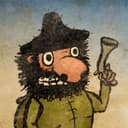
Mesmalie’s art is the first thing you’ll notice and the last thing you should judge it by. The game uses its distinctive, experimental look on purpose: the cute surface delivers material that gets dark. The clash is the point, and it works. The unsettling moments land harder because the visuals spent so long telling you to relax.
The clash is also a real buyer-beware issue. The art undersells how heavy the themes get. Read the content warning. If you’re thinking of buying this for a younger player based on the screenshots, don’t.
The original soundtrack carries much of the tonal load, shifting as the story moves between goofy humor and bittersweet, unsettling beats. A score built to swing that hard is a big part of the game’s atmosphere.
Technically, this is a modest 2D project, and a 2D game of this scope is light on hardware. The design’s risks are about story and length, not the kind of complexity that invites instability.
Platform nuances
Mesmalie is a Steam release for Windows, and it plays like a game built for a mouse. Exploration, dialogue choices, and object interaction all map naturally to a cursor, so no awkward controller layer sits between you and the coven.
Mac players should note the split. The Steam release targets Windows, and the macOS build is distributed through itch.io. Buy there, or check the system requirements on the Steam store page before you buy.
Steam Deck owners should check the store page’s compatibility rating before buying. A cursor-heavy point-and-click game depends on good trackpad and touch mapping, so confirm it rather than assume it.
On any machine, the chapter select is the feature that matters most. It turns the hunt for other endings into a series of targeted revisits instead of full replays.
Final verdict
Mesmalie understands something many bigger narrative games don’t: the player’s attention has to be earned line by line. Rain has built a game where the jokes land, the witch is memorable, the coven rewards poking around, and the darkness feels earned rather than like a cheap rug-pull. The three-session structure keeps the mechanics from going stale. The abandonment endings turn quitting into a statement. The chapter select respects your time as you chase the game’s many secrets.
It isn’t flawless. The final act doesn’t fully deliver on what the mystery sets up, and a few sections end just as they get interesting. But those are complaints you make about a game you wanted more of. We rate it a Good: solid, flawed in ways that matter, and easy to recommend to anyone who wants a sharp, dark little story for an evening at the coven.
Reviewed by the Rankeno RPG & Adventure Desk. Scores are out of 10; the overall score is the desk’s editorial judgement, informed by the four sub-scores above. How we review