Overview
Amanita Design has spent years proving that adventure games don’t need dialogue trees, tutorials, or even words. The Czech studio behind Machinarium, Samorost, and the gloriously unhinged CHUCHEL operates in a lane it essentially built for itself: tactile, wordless, hand-crafted worlds where the puzzle is the language. Pilgrims, released April 17, 2024 on iOS, Android, Steam, and Nintendo platforms, is the studio’s most structurally daring experiment — and a quietly distinctive one.
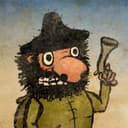
The premise is pure Central European folk tale. A wandering Tramp sets out across a small kingdom and gradually accumulates a party of misfits: a shrewd Granny, a swaggering Bandit, and an actual Devil, each with distinct abilities and social standing. Together they roam a hand-painted map, helping (and occasionally swindling) the strangers they meet. The twist is the interface: everything — items, characters, favors owed — exists as cards in a shared hand, and puzzles are solved by playing those cards against the world in whatever combination you can dream up.
That design choice repositions Pilgrims in the market. It isn’t competing with sprawling narrative adventures; it’s competing with the replayable puzzle box — closer in spirit to a tabletop game than to Machinarium. The reception suggests the bet landed: a 4.5-out-of-5 store rating and a Metacritic score of 78 point to a game that has found its audience. That staying power looks earned.
Key features
- Card-based inventory and party system: Items and party members are cards. The game is built to respond to combinations you weren’t “supposed” to try with bespoke reactions rather than a generic failure state.
- Genuinely non-linear puzzle design: Many situations have multiple valid solutions depending on which character does the asking — the Devil resolves problems very differently than Granny does.
- A wealth of unique animations and sound gags: Wrong answers aren’t dead ends; they’re jokes. Amanita animated the failure states, which changes the entire psychology of experimentation.
- Achievements built around alternate solutions: The achievement list functions as a map of everything you didn’t try, explicitly rewarding second and third playthroughs.
- Original Floex soundtrack: Live instruments and organic electronics, with guest guitar and clarinet — a score that does real atmospheric work rather than filling silence.
Analysis
The Card Table Is the Smart Move
Point-and-click adventures have a chronic disease: the pixel hunt followed by the inventory grind, where you rub every object against every hotspot until something clicks. It’s the genre’s original sin, and most modern adventures paper over it with hint systems.
Pilgrims cures it structurally. By flattening the entire game state — items, characters, obligations — into a visible hand of cards, it eliminates ambiguity about what you have and where it can go. Every screen presents a small number of card slots; the hand rarely exceeds a manageable spread. The possibility space is legible at a glance. What’s left is the interesting question: not “what can I do?” but “what should I try?”
This matters more than it sounds. Traditional adventure games punish experimentation with silence — you try a combination, nothing happens, you learn nothing. Pilgrims punishes almost nothing. Play the Devil’s card on a pious villager and you don’t get an error; you get a small, hand-animated comedy sketch. The game is stocked with these bespoke reactions, and their cumulative effect is a design loop where failure is content. The design invites you to stop optimizing and start playing, in the truest sense of the word.
Four Characters, One Deck
The party system is where the non-linearity gets teeth. Tramp, Granny, Bandit, and Devil function as verbs — each one acts on the world differently. A locked door might yield to the Bandit’s methods, the Devil’s more infernal ones, or an item-based workaround entirely. Because characters occupy card slots like anything else, swapping who confronts a problem is frictionless. The game never announces “this puzzle has three solutions”; it just quietly accepts whichever one you found, and the achievement list later reveals what you missed.
This is where the achievements stop being checkbox filler and become the actual endgame. A single run is brief — and yes, that brevity is the most common complaint, fairly. But Pilgrims is built like a folk tale that changes with the teller. A second playthrough with a “solve everything the Devil’s way” constraint plays meaningfully differently. Whether that constitutes replay value or a clever reframing of thin content depends on your temperament; we lean toward the former, because the alternate solutions are distinct work, not palette swaps.
Where It Stumbles
The flip side of legibility is a low difficulty ceiling. Veterans of Machinarium’s brain-benders will likely coast through Pilgrims; the constrained card space means brute force is always viable, and a few late puzzles fall to it. The game’s answer — that the interesting solutions are optional and self-directed — is honest but won’t satisfy players who want resistance. And the map, while charming, involves a bit more back-and-forth trudging than the runtime justifies. These are quibbles, not wounds. But they’re real, and they matter.
Visuals & performance
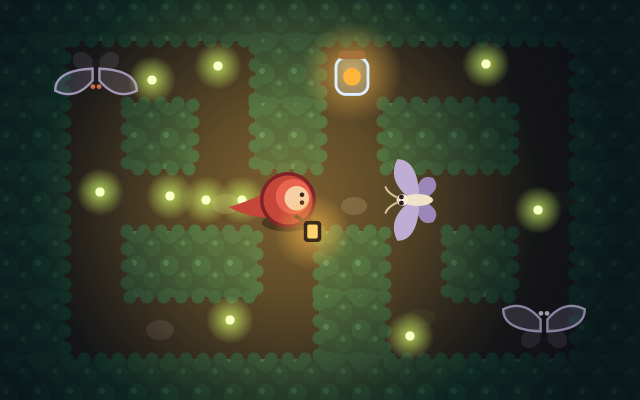
Amanita’s house style is instantly recognizable, and Pilgrims sits at its most storybook-flavored: flat, painterly backdrops with the texture of old Eastern European children’s-book illustration, characters that squash and gurgle with the studio’s signature nonsense-vocalization charm. Nothing here is procedurally generated or asset-flipped; every reaction animation was drawn on purpose, and it shows. The art direction isn’t ambitious in scale — it’s ambitious in density of hand-made detail, which is the harder discipline.
Floex’s score deserves specific credit. The blend of live instrumentation and organic electronics, with guest guitar and clarinet, gives the kingdom a warmth that pure synthesis wouldn’t. It’s a soundtrack designed to be noticed, then fade into the background, then missed when a scene goes quiet — exactly the right register for a fairy tale.
Technically, the game is undemanding by design. It’s a 2D title of modest scope from a studio with a reputation for shipping finished software, so it should sit lightly on hardware, from a mid-range Android phone to a Switch in handheld mode.
Platform nuances
Pilgrims was designed touch-first, and it shows — in the good direction.
- iOS / Android: The native habitat. Dragging cards with a finger is the most direct expression of the design, and the free-trial-with-one-time-unlock model is the right call — you sample the opening, pay once, own it. No ads, no gacha nonsense. This is how premium mobile should work, and almost nobody does it.
- Nintendo Switch: The sleeper pick. The port supports touch controls plus portrait and landscape modes — a portrait mode on Switch is a rare flourish that turns the console into a storybook you hold vertically. Docked play with a cursor works but loses some tactility.
- Steam: Perfectly competent with a mouse; card-dragging maps naturally to click-and-drag. It’s the least distinctive way to play, though achievement hunters will appreciate Steam’s tracking.
If you own a touchscreen device, that’s the version to get. The mouse version is a competent port of a touch-first game.
Final verdict
Pilgrims is a small game with a big idea executed cleanly: make every experiment worth watching, and players will experiment forever. The card system deserves study from any adventure designer still shipping inventory-combination guesswork, and Amanita’s refusal to pad the runtime with filler is a feature disguised as a flaw. It’s short. It’s also dense, generous, and quietly inventive in a genre that needed the shake-up. At its modest asking price — on any of its four platforms — we recommend it to players who value clever design over length, with the caveat that its low difficulty and brevity are real limits.
Reviewed by the Rankeno Puzzle & Casual Desk. Scores are out of 10; the overall score is the desk’s editorial judgement, informed by the four sub-scores above. How we review