

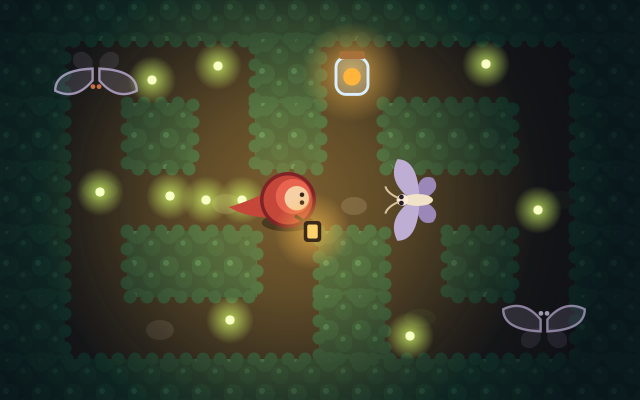
Overview
What is left of a survival game when nothing in the forest wants to kill you? Under Canopies bets that the answer is the part many players liked best anyway: the gathering, the building, the slow conversion of wilderness into somewhere worth living. Its Steam page puts the philosophy in one line: you “don’t fight nature, you join it.”
The game is a first-person, single-player cozy survival title from Novemtails, with Assemble Entertainment publishing. Players explore a forest at their own pace, forage for ingredients, collect materials, and use them to build and decorate a cabin. Gardening and cooking carry much of the weight, with a recipe list drawn from what players grow and gather. Chickens, sheep and bees round out the homestead.
It launched in Steam Early Access on October 23, 2026 at $14.99. That Early Access launch is the main caveat: the game is still in development.
The positioning is deliberate. Cozy survival is a busy shelf, and most of its occupants keep at least a token threat: a hostile night, a predator. Under Canopies removes combat entirely and keeps the first-person camera, a perspective the genre usually reserves for tension. Here it serves presence instead.
Early Steam reception is positive but limited. A small Early Access audience skews toward the already-converted, so the signal is encouraging without being decisive. A solo project earning positive early feedback is a modest sign that the game delivers what its store page promises.
Key features
- No combat, by design: The forest is a place to live in, not a threat to manage. No enemies and no weapons loop means the game’s entire budget of attention goes to building, growing and cooking.
- Cabin building and decoration: Gathered materials become a personal homestead. The split between building and decorating signals that expression matters as much as function.
- Gardening and cooking with a broad recipe list: Foraged and farmed ingredients feed a recipe list large enough to give the garden a purpose beyond tidiness.
- Animal husbandry: Chickens, sheep and bees can be raised and interacted with, adding living inhabitants to the homestead.
- Self-paced exploration: The forest opens at the player’s speed, with no stated pressure to rush.
- Steam conveniences: Steam Cloud saves, Family Sharing support and interface localization.
Analysis
The Loop
The structure is a familiar triangle: explore to gather, gather to build and grow, grow to cook. What distinguishes it is what has been removed. Without combat, the loop has no external pressure valve, so the reward for each trip into the woods must come from the homestead itself. That puts a heavy burden on the cabin, the garden and the kitchen to stay interesting.
On paper, the pieces interlock sensibly. Foraging feeds cooking directly. Gardening turns one-off finds into a renewable supply. Animals add a third production line: chickens, sheep and bees each imply a distinct output, and bees in particular fit a game about joining an ecosystem instead of strip-mining it. A broad recipe list is a respectable count for a solo-developed Early Access title, enough to make ingredient variety matter.
Survival Without Threat
The “survival” label is the design’s most interesting tension. The genre’s tension traditionally comes from scarcity and danger. Under Canopies has discarded danger, and its stated pitch of exploring “at your own pace” suggests scarcity is gentle too. That is the right call for the intended audience, and a real risk for everyone else. Players who need a fail state to feel progress will find little friction to push against.
The trade is coherent, but it narrows the audience. Token combat in cozy games is usually the weakest system on the disc, an obligation the designers visibly do not love. Cutting it outright is more honest than including a half-hearted version, and it frees a solo developer to spend limited time on the systems that define the game.
Building as the Long Game
With no enemies to gate progress, the cabin becomes the progression system. Building and decorating are the features with the longest tail: recipes can be completed, a forest can be fully explored, but a homestead is never finished. How deep the building toolset goes will decide whether the game holds attention for a weekend or for a season. The store description promises turning “a patch of woodland into a personal homestead,” which sets an expectation of meaningful freedom in placement and style.
Scope and the Early Access Question
Solo development shapes everything here. The feature list is focused: one forest, one homestead, three animal types, one player. There is no multiplayer, and for a genre where shared homesteads are a major draw, that absence will cost some sales. It also keeps the project achievable.
Early Access status is the main caveat. Open-ended Early Access periods are where small games stall. A focused feature list suggests a project that is largely built, but buyers should not expect the game to double in size before 1.0. What exists now is likely close to what will ship.
Open Questions
Several things remain unstated: how large the forest is, how much the game guides players versus leaving them to find their own goals, and how much content sits beyond the recipe list. Those questions matter more than the pitch.
Visuals & performance
The first-person camera is the defining visual decision. Most cozy homestead games pull the camera back to an isometric or third-person view that makes decorating easy and the world toy-like. Putting the player at eye level beneath the trees trades some building convenience for immersion, and it suits a game whose title is literally about what the forest looks like from below. It also raises the stakes for the environment art: a first-person forest has to reward looking at it closely.
Decoration in first person carries a known design cost. Placing and arranging objects is fiddlier without an overhead view, so the quality of the building interface matters more here than in most of its peers.
No performance data is available, and Early Access status means optimization is still in progress by definition. As a design-level expectation, a single-player game with no combat AI and a contained setting should be less demanding than large open-world survival titles, though dense first-person foliage is rarely free.
Platform nuances
Under Canopies is a Steam-only release. No console or mobile listing exists, so there is no parity question to settle.
- Price: $14.99 in Early Access.
- Steam Cloud: Saves sync across PCs, useful for a long-running homestead.
- Family Sharing: Supported, a sensible fit for a non-violent game that suits a household library.
- Languages: Interface localization is offered.
- Input: As a first-person PC game, mouse and keyboard is the natural fit. Controller support is not confirmed.
- Multiplayer: None. This is a strictly solitary forest.
Final verdict
Under Canopies knows exactly what it is. It strips survival down to foraging, growing, cooking and building, then commits to that reduction without hedging. The design is not novel in its parts, since every system here has precedent, but the combination of first-person presence and total absence of threat gives it a distinct corner of a crowded genre.
The limits are real. It is a small, solitary game from one developer, still in Early Access, with an audience verdict that remains limited. Its long-term appeal rests on a building toolset whose depth is not yet documented.
The offer is straightforward: $14.99 in Early Access. We rate it as a cautious fit for its target audience and a pass for anyone who wants their forests dangerous.
Reviewed by the Rankeno Strategy & Sim Desk. Scores are out of 10; the overall score is the desk’s editorial judgement, informed by the four sub-scores above. How we review